
You know that candidate who seemed perfect on paper but crashed during the technical interview? Or the one who aced every conversation but turned out to be a terrible culture fit? If you've been there, you understand why winging the hiring process rarely works.
Most companies approach hiring the same way. They post a job, collect resumes, do a few interviews, and hope for the best. Then they wonder why new hires don't work out. The disconnect isn't usually about finding talented people. It's about not having a clear, repeatable way to evaluate them.
That's where a structured position workflow makes all the difference.
Why Your Current Hiring Process Keeps Missing the Mark
Here's what typically happens. You need to fill a role fast. Applications start coming in. You schedule interviews with anyone who looks decent on paper. Different team members ask different questions. Someone gets a good feeling about a candidate, so you make an offer. Six months later, you're starting the whole cycle again because it didn't work out.
The average time to fill hovers around 42 days. Rushing through a disorganized process doesn't save time. It just means you'll probably make expensive mistakes.
Companies with strong employer brands get significantly more qualified applicants. But a strong employer brand isn't just marketing talk. It's about delivering a professional, consistent hiring experience that candidates actually respect.
When your process is all over the place, candidates notice. They talk to friends who interviewed last month and got completely different questions. They wait weeks for feedback while you're trying to coordinate schedules. Only about 26% of candidates report a great job search experience. The good ones accept other offers because your team can't get aligned on a decision.
The Real Challenge Most Teams Face
Here's what usually happens when companies try to implement a structured workflow. They start with good intentions. They create interview guides and assessment templates. Then real hiring needs hit, and everything falls apart.
Coordinating multiple interview rounds is genuinely difficult. You're trying to align schedules for HR, technical leads, and senior leadership. Candidates get frustrated waiting for the next step. Hiring managers forget to complete scorecards. Assessments sit ungraded for days. The whole thing becomes a coordination nightmare.
Manual coordination across multiple stages compounds the problem exponentially. That's exactly why manual position workflows break down. The structure isn't wrong. Executing it manually is just too time-consuming and error-prone.
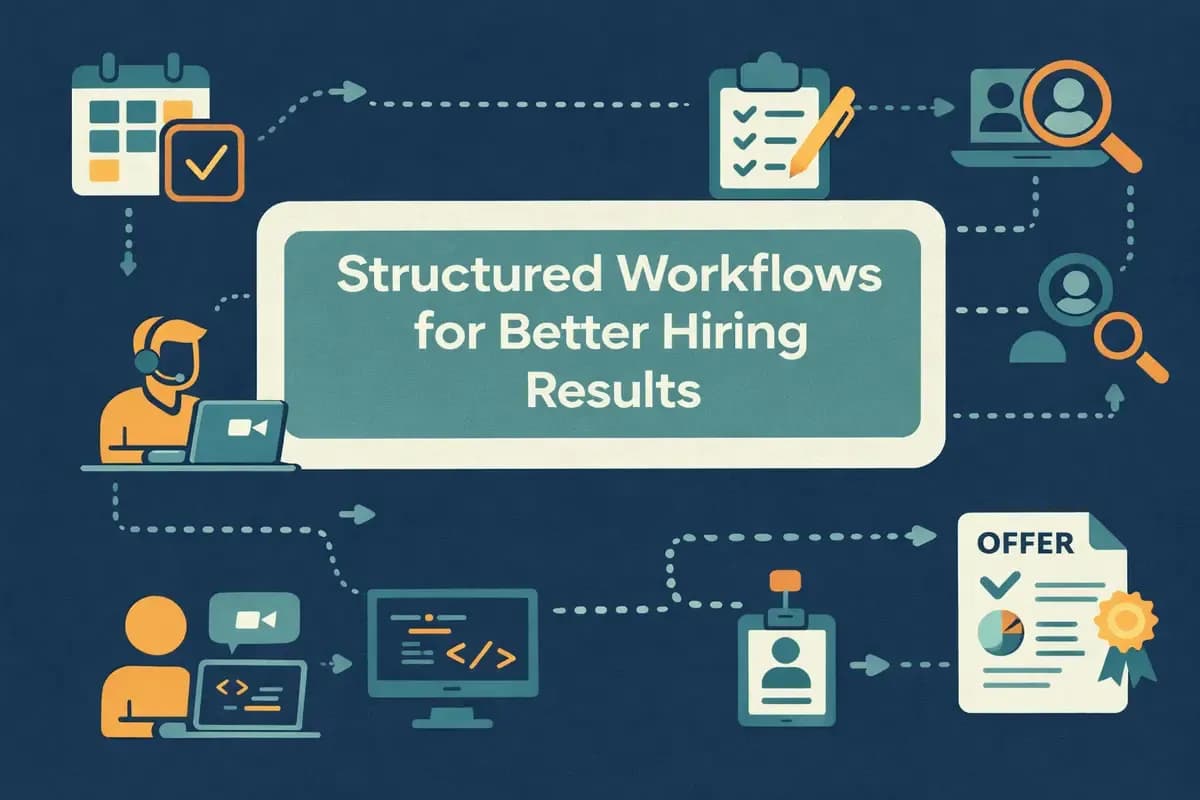
The Complete uRecruits Position Workflow That Eliminates Hiring Chaos
uRecruits solves this problem with a comprehensive position workflow built specifically for modern hiring. Each stage serves a distinct purpose, and the platform automates the coordination that normally bogs down your team.
Here's how the workflow breaks down and why each stage matters:
Stage 1: HR Audio/Video Interview
Your first real conversation with candidates happens here. This isn't about grilling people on technical details yet. You're looking at how well they communicate, whether their professional background aligns with what you need, and if their values match your company culture.
A quick video call tells you so much more than scanning a resume for the tenth time. You hear how people talk about their work. You can tell if they've actually thought about why they want this job or if they're just sending applications everywhere.
The system schedules these interviews automatically with calendar integration. No more email tag trying to find a meeting time.
Stage 2: Functional/Domain Assessment
Now you're getting into whether someone actually knows their stuff. This is where you test their knowledge in the specific area they'll be working in. Instead of asking "Can you tell me about your experience with data analysis?" you hand them a dataset and say "Show me what insights you can find."
This works for any role. Customer service candidates handle an upset customer scenario. Project managers untangle a scheduling mess. Marketing people create a campaign strategy for a real product. You're measuring real expertise, not interview skills.
uRecruits delivers these tests automatically. Candidates complete them when it works for their schedule. Results get scored and show up in their profile without you lifting a finger.
Stage 3: Live Task/Coding Assessment
For technical jobs, this is where you watch someone solve problems in real time. You're not asking people to describe how they'd approach something. You're seeing their technical abilities in action as they work through challenges.
You see how they think when they hit a roadblock. Do they panic or start breaking the problem into smaller pieces? Do they ask good questions or just guess? When their first approach doesn't work, how do they adjust?
The platform handles live coding in over 75 programming languages. Everything gets recorded so your whole team can review it later without making candidates repeat themselves.
Stage 4: Take Home/Coding Assessment
Some things just can't be evaluated in a one-hour window. When you need to see how someone approaches a complex coding challenge when they have time to think it through, you give them something to work on independently with a reasonable deadline.
The best candidates treat these seriously. They don't just meet the requirements. They think about edge cases, explain their trade-offs, and show you the kind of work they'd actually deliver if you hired them.
uRecruits lets you send these assignments with clear instructions and deadlines, then tracks everything in one place so multiple people can review and leave feedback.
Stage 5: Technical Audio/Video Round
By now you know this person can handle the basics. This conversation goes much deeper into their technical understanding. You're exploring their knowledge of algorithms, how they think about system design, whether they can solve complex coding problems while explaining their thought process.
Why did they choose this architecture over that one? What happens to their solution when you 10x the load? How would they explain this technical concept to a non-technical stakeholder?
Harvard Business School research shows that structured interviews like this lead to much better hiring decisions. The platform keeps these conversations consistent with interview guides and standardized scoring.
Stage 6: Senior HR Audio/Video Round
You've confirmed this person can do the job. Now senior leadership evaluates whether they have the right leadership qualities, enough relevant experience, and genuine alignment with your company culture.
This conversation goes into how people handle disagreements, how they think about career growth, what kind of environment helps them do their best work. For management roles, you're also learning how they lead, develop others, and make tough calls when there's no obvious right answer.
Stage 7: Conditional Offer Letter Generation
When someone makes it through all the previous rounds successfully, you send them a preliminary offer. But it's conditional because you still need to complete background checks and other verifications.
This letter spells out salary, benefits, start date, and what the job actually involves. It also makes clear that everything's contingent on passing the remaining screening steps.
uRecruits generates these from templates with all the legal language already handled, so you're not starting from scratch or worrying about missing something important.
Stage 8: Background Screening
Before someone's first day, you verify their employment history, confirm their educational credentials, and check other relevant details about their background. Did they really work at those companies? Do they actually have that degree? Are there any red flags you should know about?
This isn't about being paranoid. It's just basic due diligence that protects your company and your existing team.
The platform connects with background check providers directly. You kick off the check without leaving the system, track its progress, and get notified the moment results come back.
Stage 9: Drug Screening
For certain roles, especially anything safety-sensitive, this final compliance step is non-negotiable. It's a legal requirement in many industries and a practical necessity for workplace safety.
uRecruits handles this the same way it handles background checks. Everything stays in one system. You send the authorization, track completion, and get results without chasing people down or switching between platforms.
Why This Workflow Structure Actually Works
When you follow this clear structure, several things happen. First, you stop wasting time on the wrong candidates. That initial screening catches issues early instead of six interviews later. The assessments filter for actual skills instead of interview performance.
Second, your team makes better decisions because everyone's evaluating the same things. You're not having arguments about whether someone "felt right" in the interview. You're looking at concrete evidence of their abilities.
Third, good candidates have a better experience. They know what to expect at each stage. They get to demonstrate their skills instead of just talking about them. Even candidates who don't get offers respect a thorough, well-organized process.
What Makes Structured Workflows Actually Happen
You've probably noticed a pattern in how this workflow operates. Each stage triggers the next one automatically. Assessments get delivered without manual intervention. Interview feedback gets collected and organized. Candidates move forward based on clear criteria instead of someone remembering to send an email.
This is business process management and automation at work. BPM is simply the practice of designing repeatable workflows and then automating the coordination between stages so processes actually happen consistently.
Without automation, even the best-designed workflow falls apart. Someone forgets to schedule the next interview. Assessment results sit in an inbox for days. Hiring managers can't find the feedback from earlier rounds. You end up spending more time chasing people than actually evaluating candidates.
uRecruits handles all that coordination automatically. When a candidate completes the functional assessment, the system schedules their technical round. When interviewers finish scoring, it notifies the next person in line. Background checks get initiated the moment you send a conditional offer. Every handoff between stages happens without you managing it manually.
That's why structured workflows only work when they're automated. The structure tells you what should happen. The automation makes sure it actually does.
Complete Flexibility to Match Your Needs
Here's what makes uRecruits different from rigid hiring systems: you control the workflow completely. The standard structure works great out of the box, but you're not locked into it.
Want to reorder stages? Go ahead. Need to skip certain steps for junior roles but include them for senior positions? Easy. Want to add custom assessment rounds specific to your industry? Done.
Administrators can rearrange any stage in the workflow and attach different configurations to different job postings based on what each role requires. Technical roles might emphasize coding assessments. Leadership positions might add extra behavioral rounds. Customer-facing roles might prioritize communication evaluations.
Define it once, and uRecruits handles the execution automatically.
The Platform That Makes It All Possible
Instead of manually juggling multiple stages across dozens of candidates, uRecruits automates the entire process. The system handles scheduling, notifications, feedback collection, and progress tracking without constant oversight.
You see exactly where each candidate stands at a glance. No more wondering what happened with that person from two weeks ago. No more hunting through email threads for assessment results. Everything lives in one place with full visibility.
The platform integrates with tools your team already uses. Connect with Gmail, Google Calendar, Outlook, Zoom, and Slack so the workflow fits seamlessly into how you already work.
Ready to Transform Your Hiring Process?
When you use uRecruits to manage your position workflow, hiring becomes predictable. You know exactly what's happening at each stage. Candidates move through smoothly. Your team stays aligned on decisions. More importantly, you make better hires because you're evaluating people consistently and testing actual skills.
The time savings alone are significant. What used to require hours of calendar coordination and manual tracking now happens automatically. Your team focuses on actually evaluating candidates instead of managing logistics.
Candidates notice the difference too. They appreciate knowing what to expect and having real opportunities to demonstrate their abilities. Candidate experience directly impacts hiring costs, employer reputation, and business performance. When your process is clear and well-managed, you avoid losing great candidates to poor experiences.
The companies that hire the best people aren't necessarily the ones with the biggest budgets or the most recognizable brands. They're the ones with the most thoughtful, consistent evaluation process. They know what they're looking for, they test for it systematically, and they make decisions based on evidence instead of gut feel.
With uRecruits, you get a complete position workflow solution covering all stages from initial screening to final verification. Your workflow is fully customizable. Set it up once, adjust the order of any round, and attach it to specific jobs based on your needs. The platform manages execution automatically while your team saves hours every week on coordination.
Start building smarter workflows today and see how a structured position workflow transforms your hiring results.